

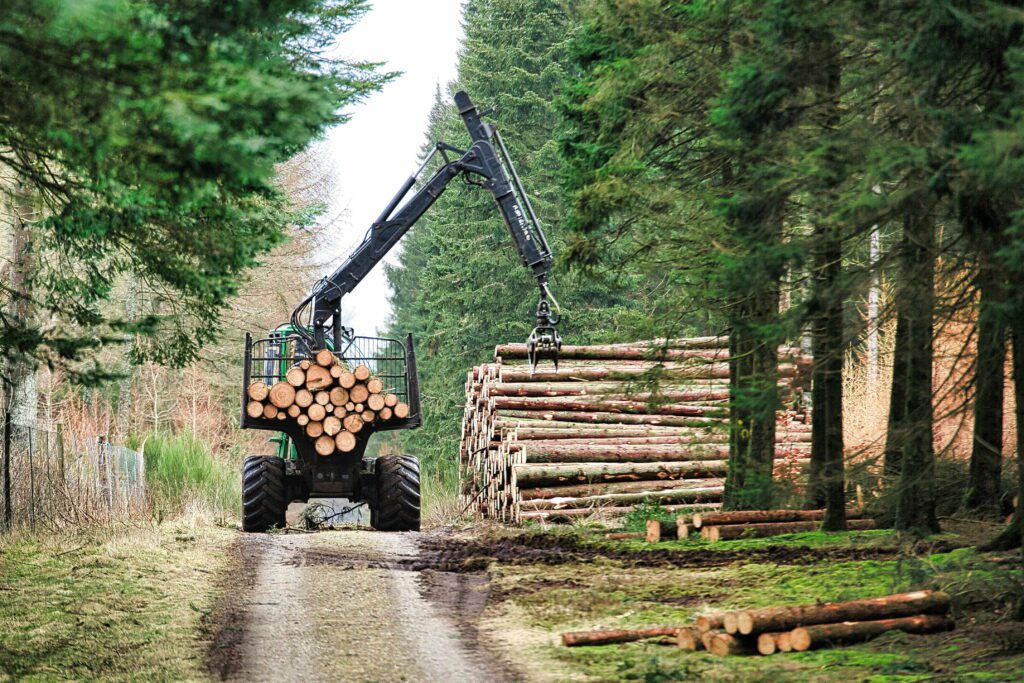
Deloitte’s Spring 2026 economic outlook projects that British Columbia’s economy will remain subdued this year, with provincial growth of 1.2%. The report cites continued weakness in forestry, slower population growth, and softer housing conditions as key factors shaping the near-term outlook. It also notes that infrastructure and resource-related projects may provide some support as the year progresses.
For owners, buyers, and investors in Fraser Valley and Greater Vancouver agricultural real estate, that forecast is relevant. However, it should not be interpreted too broadly. Farm and acreage properties are influenced by the wider economy, but they are also shaped by a separate set of fundamentals, including land quality, water access, parcel configuration, infrastructure, zoning, Agricultural Land Reserve considerations, and the underlying utility of the property for agricultural use. In that sense, broader economic conditions matter, but they do not determine value on their own.
A weaker provincial outlook usually has its first effect on market behaviour rather than on land value itself. In practical terms, buyers often become more selective. They tend to spend more time on due diligence, financing, and operational review, and they may be less willing to overlook shortcomings in access, improvements, drainage, irrigation, or business potential. In agricultural real estate, this means the difference between a well-positioned property and an average one can become more pronounced when confidence softens. This is a reasonable interpretation of current economic conditions, given Deloitte’s expectation of muted growth, cautious consumers, restrained spending, and slower housing activity.
This environment also tends to increase the importance of pricing discipline. In farm and acreage transactions, comparable sales can be misleading if they are not carefully unpacked. Sale prices may reflect not only the land itself, but also equipment, crop inventory, income streams, business assets, or unusually favourable terms. A neutral and well-supported pricing strategy becomes more important when the economy is softer, because buyers generally have less tolerance for uncertainty and less motivation to pursue properties that appear misaligned with market evidence.
Marketing strategy also becomes more consequential in a slower-growth setting. Agricultural properties are often complex assets, and their value may rest more in the land, operational improvements, and income-producing potential than in the residence. As a result, presentation that focuses too heavily on the home, while under-explaining agricultural utility, may fail to reach the most relevant audience. In a more selective market, effective positioning typically requires clear information on the parcel, infrastructure, water, access, use potential, and regulatory context.
From a regional perspective, the Fraser Valley should not be treated as one uniform market. Surrey and Langley often function differently from Abbotsford and Chilliwack because of price levels, land use patterns, buyer profiles, and the economics of different agricultural operations. Farms In BC’s internal market framework emphasizes that local pricing must account for municipality-specific factors such as soil class, crop type, infrastructure, and regional demand. It also notes that some transition-driven sellers move from higher-priced western markets into Abbotsford or Chilliwack to unlock equity, simplify operations, or purchase more functional agricultural land.
That distinction matters in the current climate. A province-wide economic slowdown does not necessarily affect all agricultural submarkets equally. Some properties may continue to attract strong interest because they fit the needs of established operators, expansion buyers, or families seeking long-term acreage ownership. Others may face more resistance if they are priced on sentiment rather than utility. In this type of environment, the spread between high-quality, well-located agricultural assets and less functional properties can become more visible. This is an inference drawn from how specialized agricultural buyers evaluate farmland and acreage assets, as described in the Farms In BC material.
For sellers, the present market may favour preparation over speed. That can include reviewing zoning and ALR constraints, organizing operational and financial information, clarifying easements and rights-of-way, and understanding how infrastructure contributes to value. Farms In BC’s positioning document highlights that these elements are frequently overlooked when agricultural properties are treated too much like standard residential listings, and that those oversights can lead to pricing errors, longer marketing periods, or failed transactions.
For buyers, a softer economy does not always translate into sharply lower prices, but it can improve negotiating conditions in other ways. More cautious sentiment may create opportunities for better terms, more deliberate due diligence, or access to off-market opportunities that never reach the public market. Farms In BC notes that specialized agricultural representation often adds value through targeted outreach, stronger buyer qualification, and deeper due diligence around ALR rules, zoning, and operational realities. In a less certain economy, those advantages may become more meaningful.
It is also worth noting that Deloitte’s forecast is not a projection of severe contraction. Its Spring 2026 report characterizes Canada’s growth as modest rather than collapsing, with national GDP forecast at 1.2% in 2026 after 1.7% in 2025, and 1.9% in 2027. For British Columbia specifically, Deloitte expects muted growth this year, while identifying infrastructure and major project activity as partial offsets to weakness in forestry and housing.
Taken together, the current outlook suggests a market that may be more disciplined, more selective, and more dependent on quality execution. That does not mean all agricultural real estate will weaken in the same way, nor does it mean activity will stop. It means decision-making may become more sensitive to pricing, property fundamentals, due diligence, and market positioning. In specialized sectors such as Fraser Valley farm and acreage real estate, those factors often matter more than broad economic headlines alone.