

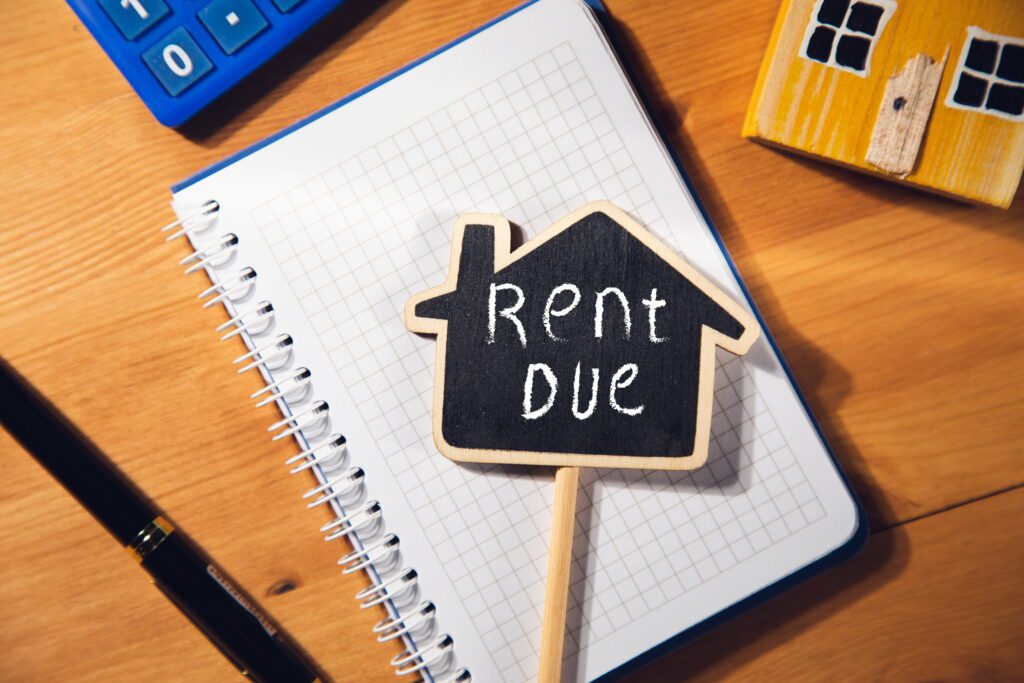
British Columbia has confirmed another change to how much landlords can raise rents.
Starting January 1, 2027, the maximum allowable annual rent increase will be 2.2%, slightly below the 2.3% limit in place for 2026. The Province says this marks the seventh consecutive year that the allowable increase has been capped at or below inflation.
For renters, that may sound like welcome news.
For landlords and real estate investors, however, the picture is more complicated.
And for anyone making a major property decision in British Columbia — whether that means owning rental housing, buying an investment property, selling an acreage, or repositioning a farm property — the bigger lesson is worth paying attention to.
Real estate decisions are rarely about one number.
What Is Changing With B.C. Rent Increases in 2027?
The 2027 maximum allowable rent increase will be 2.2%.
Under B.C.’s Residential Tenancy Act, landlords generally cannot simply raise an existing tenant’s rent whenever operating expenses increase. Rent can normally only be increased once every 12 months, landlords must provide at least three full months of notice, and the increase must stay within the annual limit unless another permitted process applies.
The basic idea is easy to understand.
Renters get more predictability.
If someone knows their rent cannot suddenly jump 10% or 15%, it becomes easier to plan a household budget.
That matters when families are already dealing with the cost of groceries, transportation, utilities, and other everyday expenses.
But there is another side to the equation.
Why Some Property Owners Are Concerned
A recent Daily Hive report looked at the possible longer-term effects of B.C.’s rent-control system.
Giacomo Ladas of Rentals.ca argued that while rent limits can provide short-term stability for existing tenants, landlords still face changing expenses such as taxes, utilities, maintenance, financing, and repairs. If those expenses rise faster than rental income, some owners may try to recover the difference when a unit eventually becomes vacant.
That creates an interesting situation.
The person who stays in the same rental for years may have relatively predictable increases, while someone searching for a new rental could face a very different market price.
B.C. currently does not apply the annual rent cap to the rent negotiated when a new tenancy begins after a unit becomes vacant. Daily Hive points to this difference between rents for existing tenants and asking rents on vacant units as an important part of the debate.
In simple terms, imagine putting a lid on one side of a container while pressure continues building underneath it.
The pressure does not necessarily disappear. It may show up somewhere else.
Vancouver Rents Have Already Shifted
The rental market is also changing for reasons beyond rent-control policy.
According to the Daily Hive report, average asking rent in Vancouver peaked at approximately $3,335 in September 2023. By July 2026, it had fallen to approximately $2,686.
The provincial government has also pointed to declining asking rents in several B.C. communities. In its August 2026 announcement, the Province cited year-over-year decreases in purpose-built rental asking rents in markets including Abbotsford, Langley, Coquitlam, New Westminster, and Richmond.
That is an important reminder for property owners.
Government policy matters, but so do supply, population growth, employment, interest rates, construction activity, financing costs, and local demand.
No single headline tells you what a property is worth or what you should do with it.
What Does This Mean for Real Estate Investors?
For investors, the conversation should go beyond, “How much rent can I charge?”
A better question might be:
What does this property look like as a long-term asset?
Consider a property generating $5,000 per month.
A 2.2% increase equals $110 per month, bringing the rent to $5,110.
Now compare that increase with possible changes in property taxes, insurance, repairs, utilities, borrowing costs, and major capital expenses.
Suddenly, the difference between gross rent and actual profitability becomes much more important.
That is why experienced investors usually look at the full picture: income, expenses, financing, future capital requirements, location, land value, redevelopment potential, and exit strategy.
The same thinking applies even more strongly when dealing with larger properties.
Why Acreage and Farm Owners Should Pay Attention
At first glance, a provincial rent-cap announcement may seem like a Vancouver apartment story.
But there is a wider lesson here for farm and acreage real estate in the Fraser Valley.
Many rural properties are not simple residential assets.
An acreage may include a main residence, additional accommodation, agricultural buildings, leased land, storage, production infrastructure, or other income-producing components.
A working farm can be even more complex.
Its value may be influenced by soil, parcel configuration, water access, irrigation, buildings, crop type, Agricultural Land Reserve considerations, operational capacity, and long-term agricultural use.
That is why evaluating a Fraser Valley farm based only on the house — or based on what a nearby residential property sold for — can lead to the wrong conclusion.
For owners in Abbotsford, Chilliwack, Langley, Surrey, Delta, Mission, Maple Ridge, and surrounding communities, changing housing regulations are another reason to review the entire property rather than focusing on one source of income or one comparable sale.
Should You Sell, Hold or Reposition?
There is no universal answer.
For one owner, holding a property for another decade may make perfect sense.
Another may decide that rising operating costs and changing regulations make it a good time to sell.
A farm family may want to downsize, unlock equity for retirement, or move from a higher-priced area such as Langley or Surrey into the eastern Fraser Valley.
An established farmer may see the same market conditions as an opportunity to acquire neighbouring land and expand.
This is why major real estate decisions should start with the owner’s goals — not with a headline.
Sometimes the best move is selling.
Sometimes it is buying.
And sometimes the right answer is doing nothing at all.
The Bigger Picture for B.C. Property Owners
B.C.’s 2.2% rent increase limit is ultimately one piece of a much larger real estate market.
For renters, the policy provides greater predictability for existing tenancies.
For landlords, it makes expense management and long-term planning increasingly important.
For investors, it reinforces the need to understand actual returns rather than simply looking at gross rental income.
And for farm and acreage owners, it highlights something we see repeatedly in agricultural real estate:
The value of a property is about much more than what it earns today.
Land should be viewed through the lens of its location, agricultural potential, infrastructure, permitted uses, market demand, income potential, and long-term value.
If you own a farm or acreage in the Fraser Valley and are wondering how changing market conditions could affect your property, a detailed farm and acreage market evaluation can provide a much clearer picture.
At Farms In BC, our approach starts with the land.
We look at the factors that actually drive agricultural and acreage value, then help owners decide whether selling, holding, leasing, buying, or repositioning makes the most sense for their long-term goals.
Because when the property represents years of work — and often generations of family wealth — the decision deserves more than a quick residential price estimate.
Thinking about selling, buying, or repositioning a farm or acreage in the Fraser Valley? Contact Nav Sekhon at 604-782-0988 to discuss your property and your next move.