

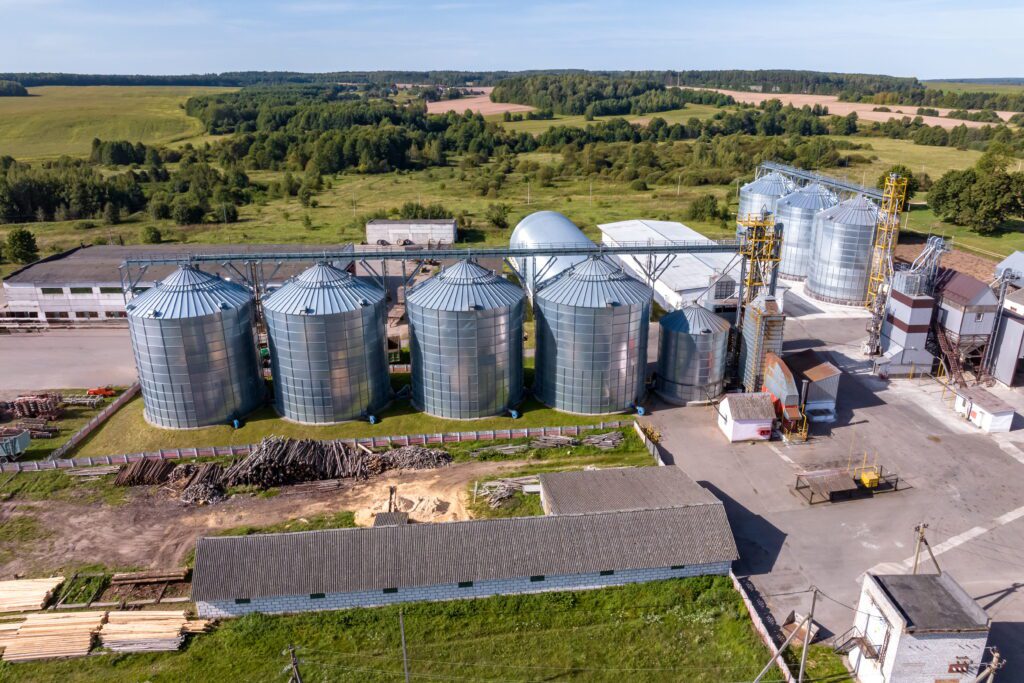
If you own farmland in the Fraser Valley, Delta, or Richmond, a quiet policy proposal from this summer deserves a closer look. The Province has floated a change that would make it easier to build food processing facilities on certain Agricultural Land Reserve (ALR) parcels. Supporters see jobs and investment. Many in the farm community see a door opening to industrial use on land that was meant to grow food. Either way, it touches land value, buyer demand, and what you can realistically do with an ALR property.
What the Province Has Proposed
Today, a food processor operating in the ALR generally has to source at least half of its primary product from B.C. farms. The proposal released by the Ministry of Agriculture and Food in late July would lower that threshold to just 5% on lower-capability land, meaning the remaining 95% could come from anywhere.
The change would not apply to all farmland. According to the Province, it would cover soil Classes 5 to 7, plus Class 4 land only where servicing is already in place. The higher-capability Class 1 to 3 soils would keep the existing 50% rule. Projects would still need a professional agrologist’s soil assessment and local government approvals. The Province estimated that roughly 500 to 1,000 hectares in the Lower Mainland and Fraser Valley could qualify.
Public feedback was originally due September 3 and was extended to September 18, 2026. Four days later, a snap provincial election was called, with voting day set for October 24. Agriculture Minister Lana Popham, who championed the proposal, announced she would not seek re-election. So for now, the change is unresolved rather than off the table.
Why It’s Drawing Pushback
The response from agricultural groups has been pointed. The Agricultural Land Commission, the BC Agriculture Council, and the Small-Scale Meat Producers Association all raised concerns. Their main arguments are worth understanding, whether or not you agree with them:
Weak ties to local farming. Critics question how a plant that can bring in 95% of its inputs from outside the province meaningfully supports B.C. growers.
Pressure on land prices. If processing becomes a permitted path on some ALR parcels, those parcels may start to be valued like industrial land, pushing them further out of reach for working farmers.
Biosecurity. Bringing large volumes of imported raw product into farming areas could raise the risk of pests and disease.
Processing bottlenecks may not ease. Small livestock producers argue new capacity could simply be filled by larger out-of-province suppliers.
On the other side, business groups such as the Greater Vancouver Board of Trade and the Abbotsford Chamber of Commerce welcomed the engagement, and the Province has framed the idea as a food security and economic development measure at a time of trade uncertainty.
What This Could Mean for BC Farm Owners
For sellers, this matters because land value on the ALR is tied closely to what the land can be used for. If a version of this rule moves forward, some owners of serviced Class 4 or lower-class parcels near major roads could see new interest from processors or investors who would never have looked at the property before.
That said, it would be a mistake to price a property as if this change is already law. It isn’t. Even if it passes, eligibility would depend on a site-specific soil assessment, municipal zoning, servicing, access, and multiple approvals. A parcel that “might qualify” is very different from a parcel that is approved.
For owners of high-capability Class 1 to 3 farmland, the direct impact would likely be limited, since the 50% rule would stay in place. The indirect effects, such as shifting land values nearby or more industrial activity in farming areas, are harder to predict.
What Buyers Should Watch For
If you’re looking at acreage partly because of potential processing or agri-business use, build that into your due diligence rather than your assumptions:
Confirm the soil classification with a qualified agrologist, not just the listing description. Check whether the property is actually serviced, since that detail could decide eligibility for Class 4 land. Ask the municipality how its bylaws treat food processing on ALR land; the Union of BC Municipalities has asked that local governments keep the ability to say no. And look closely at water, drainage, road frontage, and truck access, because a processing use places very different demands on a site than a hobby farm or blueberry field does.
Buyers should also be cautious about paying a premium today for a use that may never be allowed. Speculative value can disappear quickly when policy shifts.
The Fraser Valley and Greater Vancouver Angle
Much of the land in question sits in our backyard. The Lower Mainland has one of the tightest industrial land markets in the country, and that pressure is exactly why many in the farm community worry about this proposal. Areas like Delta, Richmond, Surrey, Langley, and Abbotsford have long seen tension between farm use and nearby industrial demand.
It’s also worth remembering that lower soil class does not always mean low agricultural value. Some Class 4 land in the region supports productive crops, which is part of why agricultural groups are pushing back.
The Practical Takeaway
Nothing has changed on the ground yet. With an election underway, the proposal’s future depends on who forms the next government and how they choose to handle it. Interest in more flexible processing rules exists on more than one side of the legislature, so it’s reasonable to expect this conversation to continue.
If you own ALR land, now is a good time to understand your property’s soil classification, servicing, and zoning, so you can make clear decisions whichever way this goes. Farm owners should review any plans that depend on a change in permitted use with their lawyer or accountant before acting. Buyers should confirm zoning, ALR rules, water access, and building options during due diligence.
Talk It Through With a Farm-Focused Team
Policy changes like this can affect how a farm is valued and marketed, but the details matter. If you’re wondering how proposals like this could affect your property, or you’re weighing a purchase on ALR land, the Farms In BC Real Estate Group is happy to walk through it with you. Reach out for a confidential property evaluation or a no-pressure conversation at 604-782-0988.